Plastic Shores
Waste as Land: A Material Study of Tuvalu
In Tuvalu, waste is both a crisis and a landscape. Plastic bottles, aluminum cans, shredded packaging—materials that arrive from distant economies—pile up with nowhere to go, transforming into mountains that shift, burn, and settle into the island's body. These aren't simply landfills. They are living ecologies, metabolic systems where decay, heat, and adaptation unfold in the absence of formal infrastructure. As imports continue to flow in, Tuvalu becomes deeply entangled in global material systems that leave their imprint long after their utility is exhausted.
Before ever arriving in Tuvalu, I began by studying its material systems from afar. What struck me was the closed-loop nature of the island: everything that enters, especially through imports, must stay. There's no large-scale recycling, no functioning export routes for waste, and limited infrastructure to process what remains. I developed a diagram to trace how waste circulates through four main domains: it enters as goods, accumulates on land, seeps into the ocean, and only in rare cases exits the island system again. This early mapping helped me understand waste not just as an outcome, but as a flow.
When I finally arrived in Tuvalu, the abstract transformed into the intimate. Waste was no longer a generalized concept but a deeply stratified material reality. Plastics, metals, e-waste, medical waste, organic waste—each category juggled informally between household yards, makeshift drop points, or beachside burning pits. With no industrial sorting facilities, waste flows chaotically through the island, often ending up in a central landfill or spilling to the north and south ends after floods. Hazardous and medical waste, in particular, lack defined destinations—they are burned, buried, or simply left to decay.
What emerged from this mapping was not only a logistical crisis but an ecological system. Each waste site became a metabolic node in a broader environmental feedback loop: leaching into the groundwater, feeding fires, harboring growth, or radiating heat. Waste wasn't merely residue—it was reshaping the island, entangling itself with its topography, climate, and daily life.
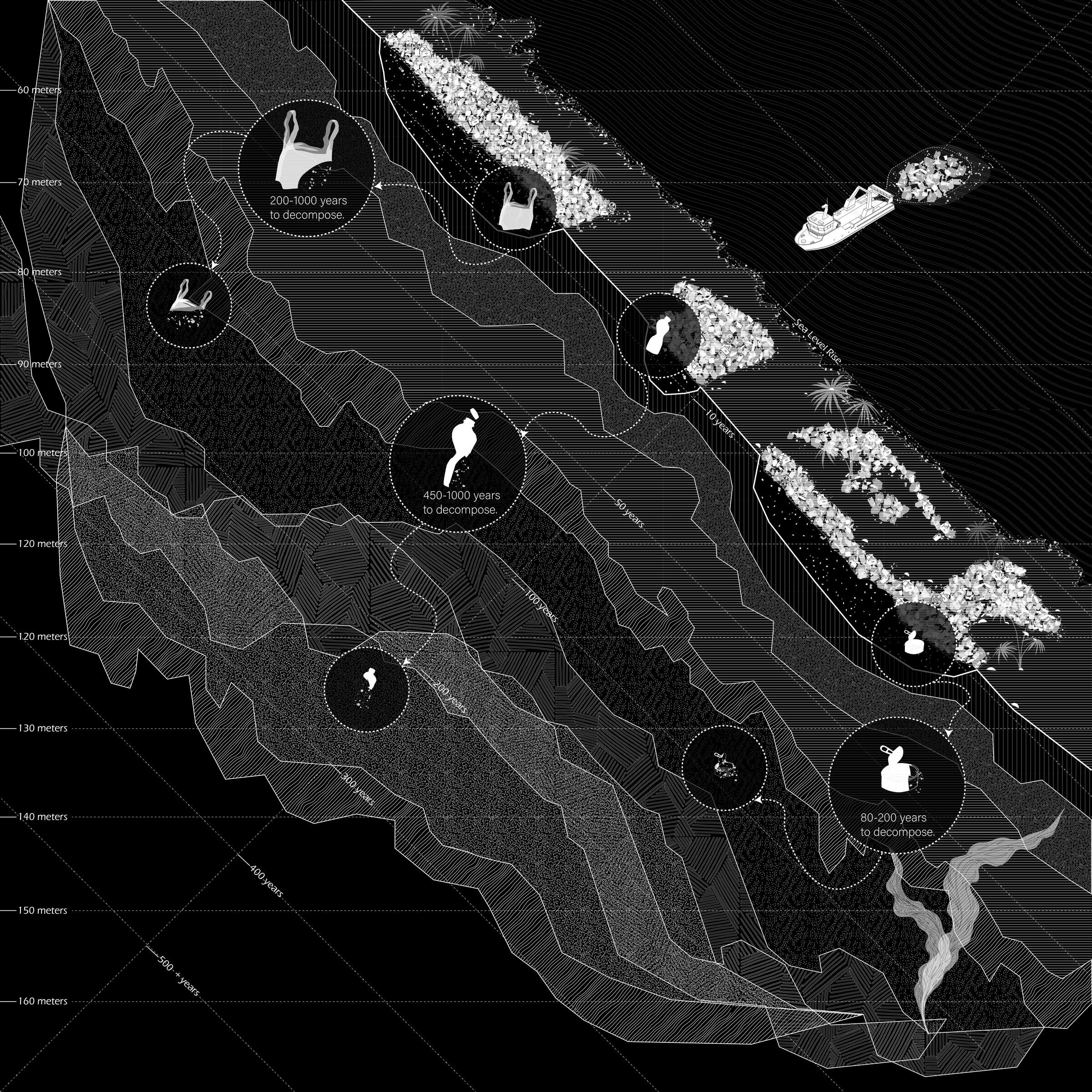
Before I ever saw Tuvalu, I created a speculative section drawing—reimagining the island as a mountain made not of soil, but of slow-decaying matter. Layer by layer, it charted plastics, metal, glass, and rubber based on their decomposition timelines. It was my way of asking: what happens when waste becomes the terrain? If Tuvalu's natural land is disappearing due to sea-level rise, might its waste become its future ground? Could this discarded matter serve as a sedimented archive—dark, uncomfortable, and resistant?
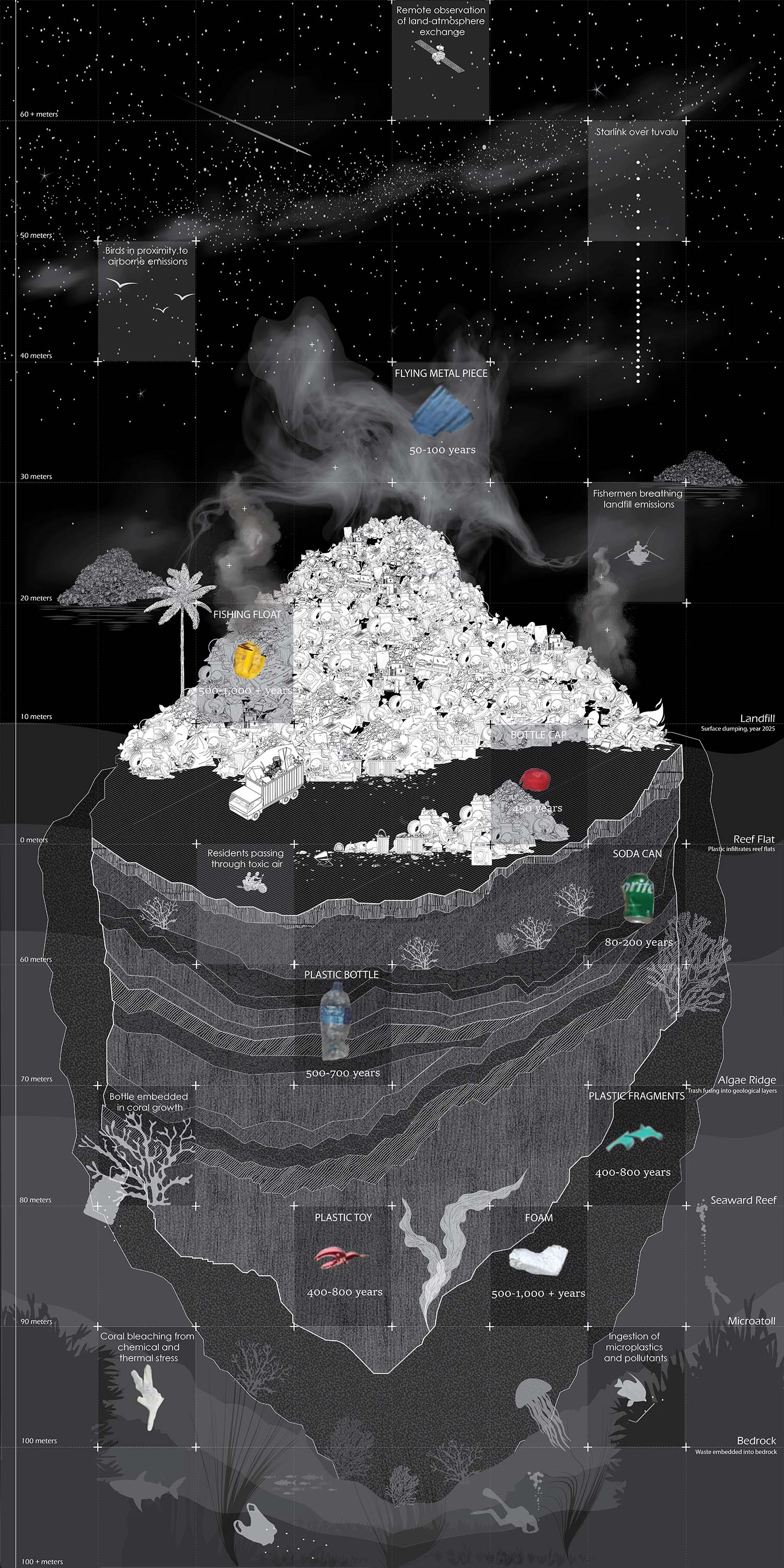
But that idea shifted dramatically once I arrived. I had seen waste as mass, as geology. What I hadn't understood was its living, daily entanglement with the people of Tuvalu. Waste wasn't static—it was handled, sorted, burned, shaped, and even mourned.
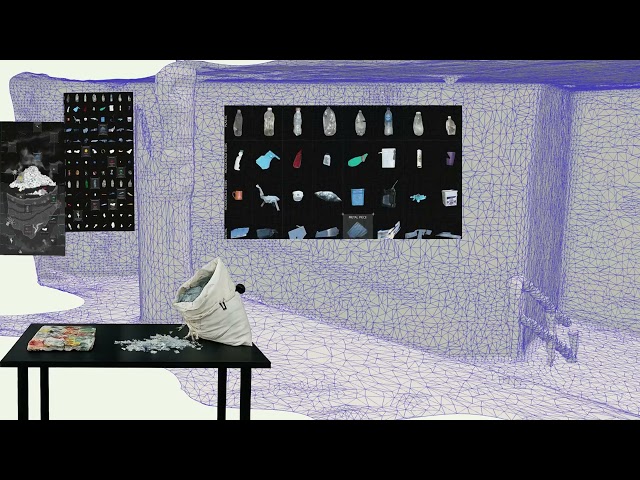
To formalize our own responsibility as visitors, I created a protocol called the Data Mourning Agency. It was a framework for our class to collect, track, and repurpose waste without adding to Tuvalu's already burdened systems. We gathered discarded plastic, handed it to the local waste management team, and they shredded it on-site. That small act of collaboration shifted something for me. It wasn't just about minimizing our footprint—it was about sharing methods of care, and possibly extending them.
Thermal imaging helped deepen that understanding. We used it to observe how materials like plastic and aluminum respond to heat—how they absorb, store, or reflect it. Heat affects decomposition rates: some plastics, when exposed, may break down faster, releasing toxins; metals might remain stable but radiate heat into their surroundings. This data suggested that waste is not only structurally active—it is thermally alive. It interacts with climate, and that interaction can inform how we design its afterlife.
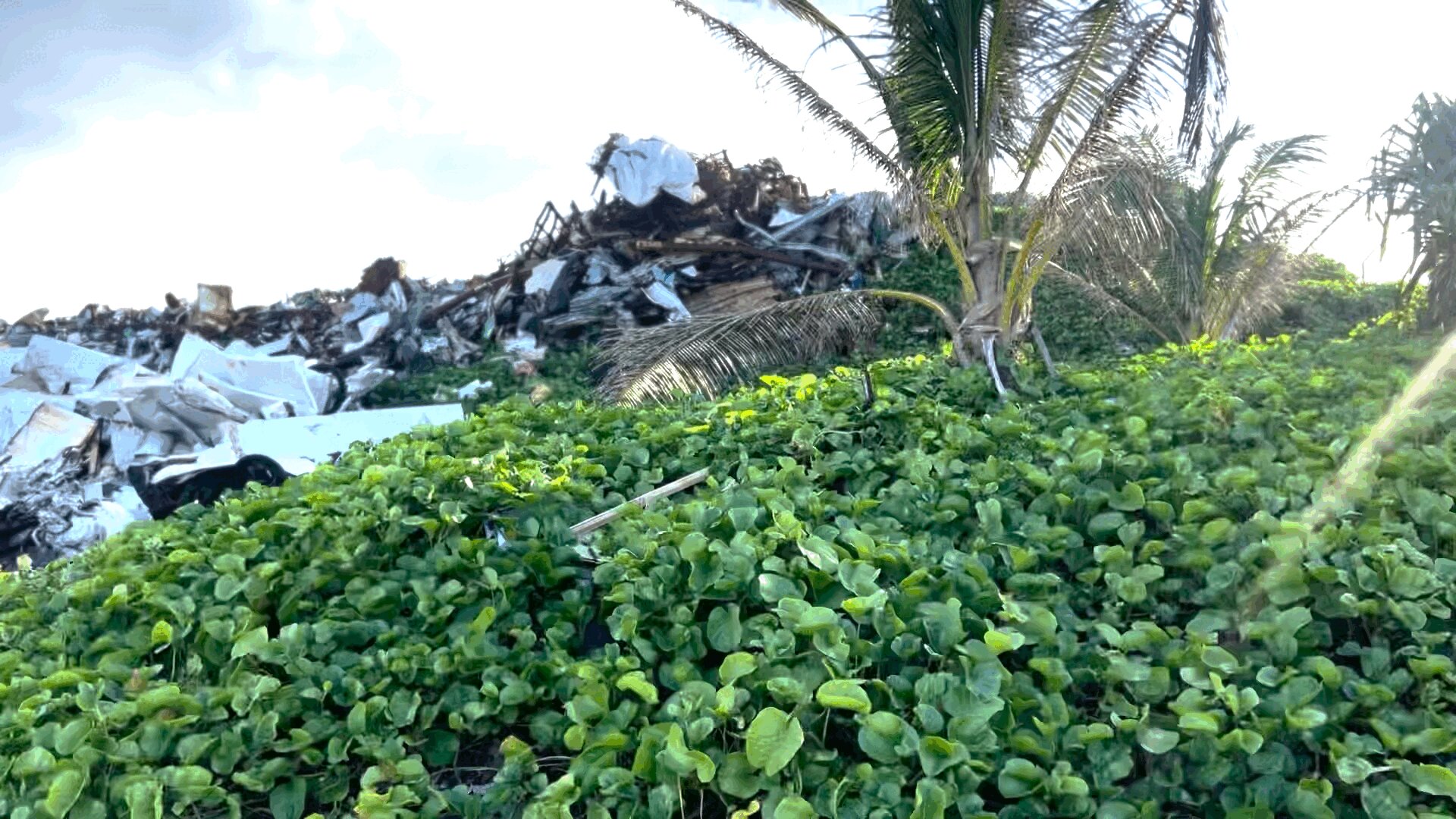
The complexity of Tuvalu's waste system was often crystallized in moments of contrast. I photographed the same landfill at two different points in time. In one image, greenery crept over heaps of Styrofoam and plastic. In the other, that same waste was burning—thick smoke rising, urgent and acrid. Both were forms of care. One slow and adaptive, the other immediate and destructive. In Tuvalu, fire is a management tool—a way to reduce volume and survive. But it also transforms the land and the air.
My process became a reflection of these transformations. I documented fragments of waste, but also my own movements—riding with the local waste team, sorting trash, filming, drawing. This experience blurred the line between observation and collaboration. Editing became a method of care: a way to see not just waste objects, but waste systems—networks of interaction between people, materials, and time.
To hold onto these observations, I created a taxonomy. A catalog of what we used, carried back, or encountered: shredded plastic, caps, bottles, foam, and more. By isolating and arranging each piece, I tried to resist the urge to look away. In Tuvalu, waste often accumulates quietly, becoming background. But here, each object became a unit of care—a visible record of impact.
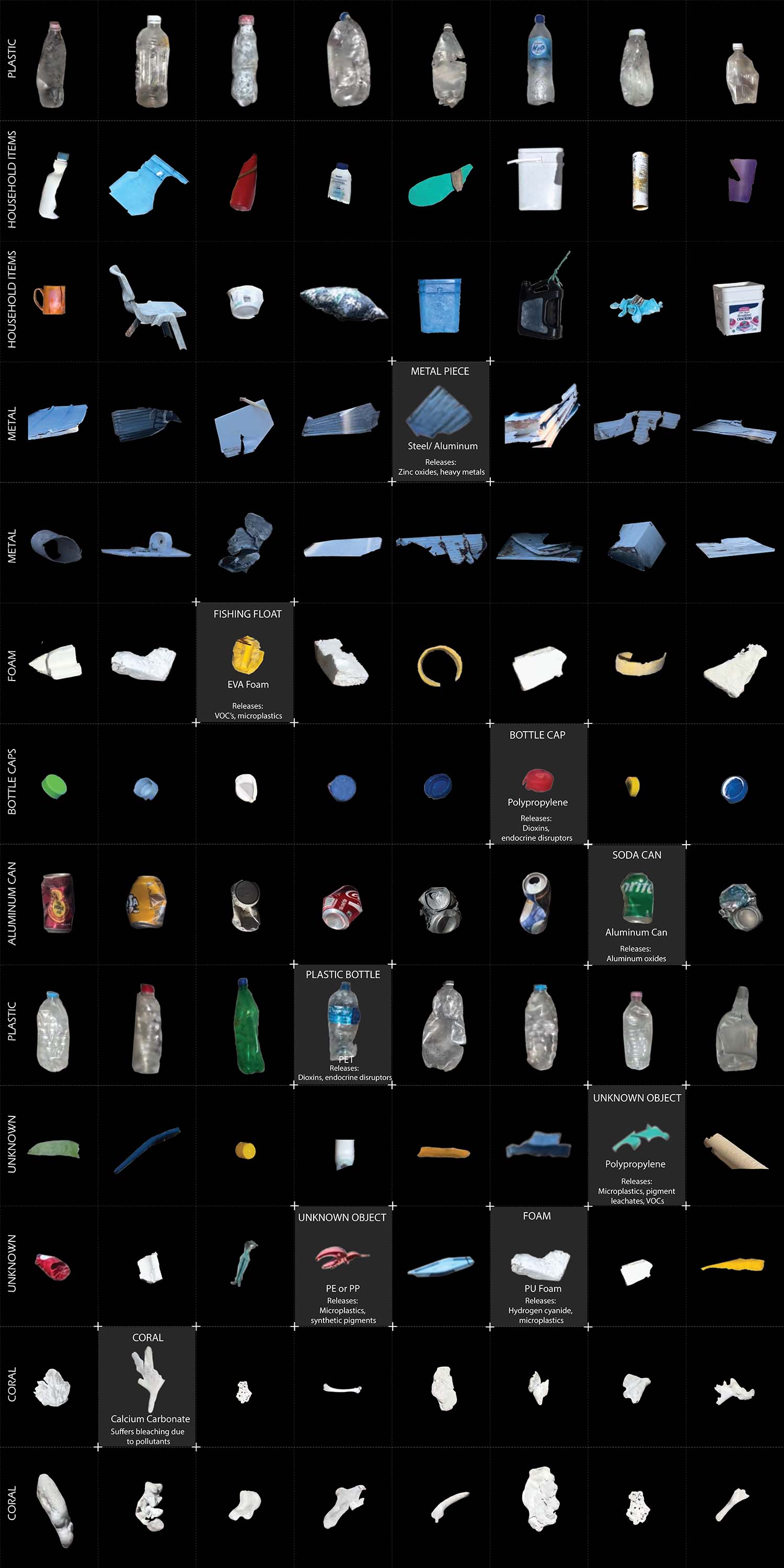
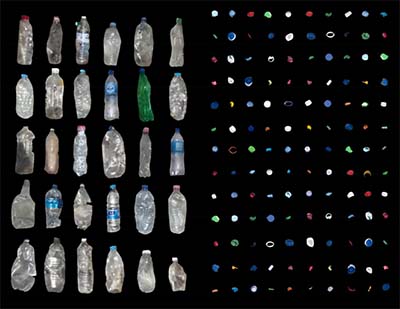
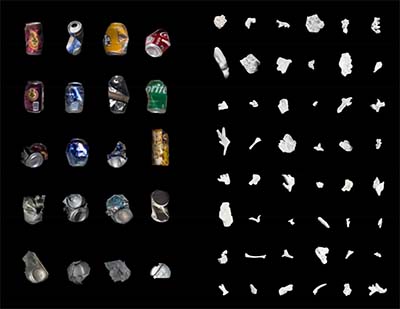
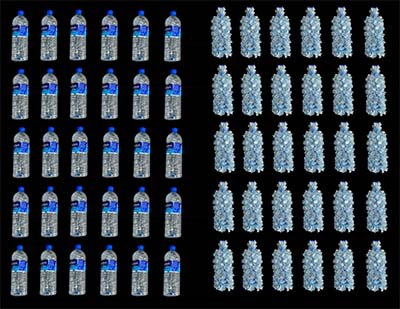
In a place where land is disappearing and waste has no 'afterlife,' this form of attention felt urgent. The catalog, the protocol, the images and videos—they are all small echoes of a place that continues to bear witness. They are an attempt to slow down, to observe, and to treat every fragment as worthy of being named, carried, and remembered.